
How Blockchain and Agriculture Intersect: AgriTech’s Quiet Revolution in Food Security

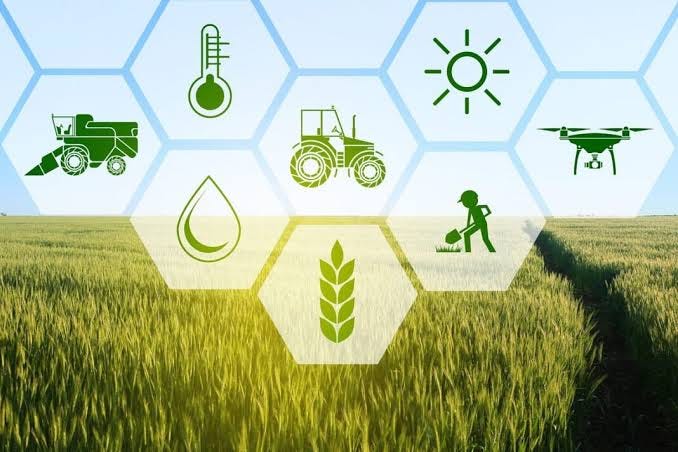
Over the last decade, the word blockchain has been thrown around mostly in conversations about cryptocurrencies, NFTs, and digital money. But quietly, without the hype, blockchain has been reshaping one of the oldest and most important industries in the world — agriculture.
This fusion of farming and technology is known as AgriTech, and blockchain is becoming one of its most powerful tools. Not because it is trendy, but because it solves real problems that affect how we produce, move, price, and trust food.
And in a world constantly facing food shortages, rising prices, climate shocks, and supply-chain disruptions, innovations that strengthen food security are more important than ever.
In simple terms:
👉 Blockchain is helping us know where our food comes from, how it was grown, whether it’s safe, and how to get it to the right people at the right time.
Let’s break it down in a way anyone can understand.
What Is Blockchain in Simple Terms?
Forget the complicated definitions.
Think of blockchain as a digital notebook that everyone can see, no one can change, and everyone agrees is true.
Every time someone adds new information to the notebook (for example, “This maize was harvested today” or “This shipment reached the warehouse”), that information becomes permanent and traceable.
It’s like having a trustworthy eyewitness recording every step of the food journey — from the farm, to the factory, to the truck, to the shop shelf.
Why Agriculture Needs Blockchain
Agriculture faces real problems:
Farmers often get unfair prices.
Consumers don’t know whether food is real, safe, or honestly labelled.
Middlemen benefit more than growers.
Fake or expired products enter markets.
Supply chains are inefficient and slow.
Governments struggle to track food quality and stock levels.
Blockchain steps in as a solution because it creates trust, transparency, and accuracy in a system that has historically lacked all three.
How Blockchain Is Transforming Agriculture
1. Food Traceability: Knowing Where Your Food Comes From
Have you ever wondered if “organic”, “free-range”, or “non-GMO” labels are actually true?
With blockchain, food can be tracked from seed to shelf.
For example:
A mango harvested in Limpopo can be scanned and tracked through packing, refrigeration, transportation, and arrival in a supermarket in Johannesburg.
If contamination happens, authorities know exactly where to find the affected batch in minutes — not weeks.
This improves food safety, reduces food fraud, and builds consumer trust.
2. Better Market Access for Farmers
Many small-scale farmers are locked out of big markets because they lack proof of:
product quality
harvest dates
farming methods
compliance standards
Blockchain creates a digital record of all their activities — automatically.
This means a small farmer in a rural village can prove the quality of their crop and access better buyers, better prices, and even export markets.
It’s a game changer for farmer empowerment.
3. Smart Contracts for Fair Payment
A smart contract is simply a digital agreement that executes itself when conditions are met.
For example:
A buyer pays automatically when a farmer delivers verified produce.
Insurance pays out instantly when weather data confirms drought or flood.
Cooperatives can distribute profits automatically and transparently.
This reduces corruption, delays, and disputes.
4. Reducing Food Waste and Shortages
South Africa and many countries lose tons of food every year due to poor coordination.
Blockchain provides real-time data on:
where food is,
how much is available,
where shortages might occur, and
which routes are congested.
This helps governments and businesses respond faster and smarter.
In terms of food security, this is huge.
It means we can prevent shortages before they happen.
5. Strengthening Supply Chains
Supply chains break for simple reasons:
fake fertiliser,
stolen goods,
inaccurate storage records,
lost paperwork,
wrong pricing,
delayed transport.
Blockchain cuts out the guesswork.
Everyone involved — farmers, buyers, transporters, regulators — works from the same verified, unchangeable information.
This improves reliability and reduces the cost of food.
6. Fighting Counterfeit Products
Fake seeds, expired goods, watered-down chemicals — these products crush farmers.
Blockchain ensures every agricultural input has a digital fingerprint proving that it is authentic.
This protects farmers from fraud and improves crop yields in the long run.
7. Unlocking Agri-Finance and Loans
Banks hesitate to lend to farmers because there is often no reliable proof of:
production records,
sales history,
farm performance,
risk exposure.
Blockchain creates a transparent farming history that lenders can trust.
Suddenly, farmers can access loans, insurance, and investment — all essential for food security.
Why Blockchain Matters for Food Security
Food security means:
Enough food
Accessible food
Safe food
Affordable food
Sustainable production
Blockchain helps achieve all of these by:
✔ Making food safer
Contaminated or fake products become easier to detect.
✔ Making distribution more efficient
Food gets to where it’s needed without bottlenecks.
✔ Reducing fraud and corruption
Records can’t be manipulated.
✔ Empowering farmers
Better prices, fairer payments, access to finance.
✔ Improving government planning
Real-time agricultural data means better decision-making.
In a world facing climate change, droughts, soil degradation, pandemics, and economic instability, having a secure and transparent food system is not optional — it’s essential.
The Future of Blockchain in AgriTech
We are still in the early stages, but momentum is building.
Countries are experimenting with:
blockchain-powered grain storage
livestock tracking
digital cattle passports
drought insurance via smart contracts
blockchain-based export certification
farmer cooperatives using tokenised systems
South Africa, with its strong agricultural sector and growing tech ecosystem, is well-positioned to become a leader.
One day, buying a tomato might include scanning a QR code that shows its entire journey — from soil to supermarket.
And that future is closer than many people think.
Final Thoughts: The Quiet Revolution Feeding the Future
Blockchain is often associated with crypto speculation.
But beyond the noise, it is quietly building something far more important:
A food system that is transparent, fair, efficient, and trustworthy.
If AgriTech continues to grow — and if governments, farmers, and businesses adopt these tools — blockchain could become one of the most powerful weapons we have against hunger and food instability.
The world doesn’t just need more food.
It needs smarter ways of managing it.
And blockchain, surprisingly, may be part of the answer.